07123 456 789

Smart Technology  –  
Simple Ownership

Cost effective to buy 

Near-Zero Running Costs Low maintenance

Naturally balanced with minimal user input 

Remote sensing reporting to website 

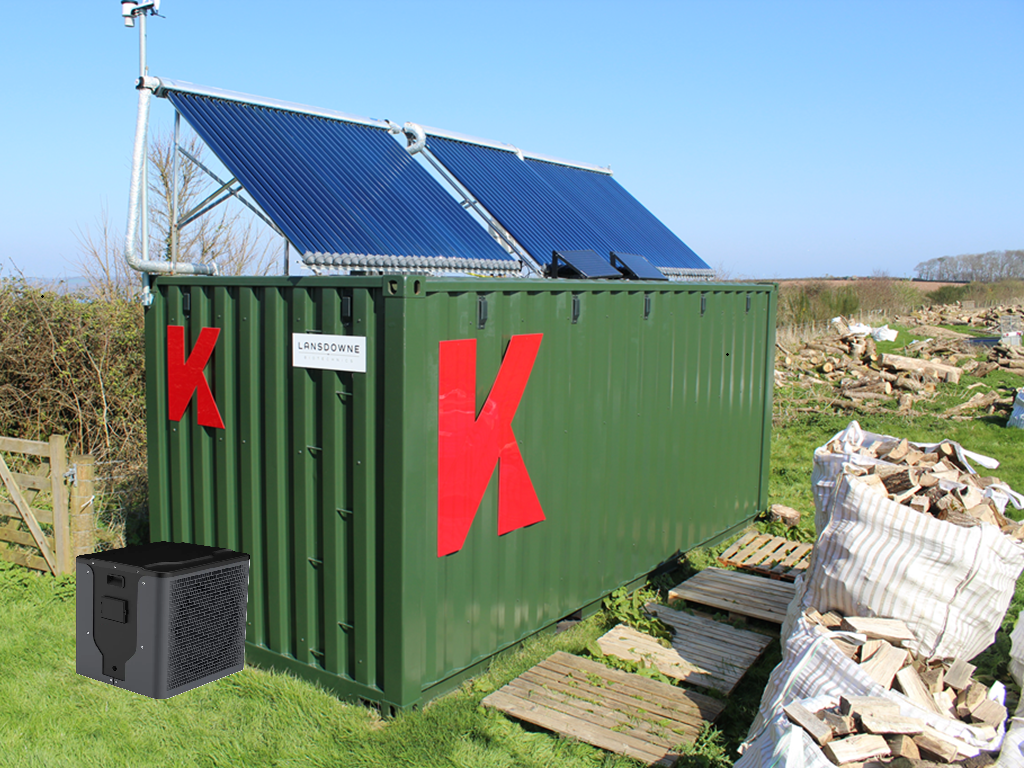
Pure Solar

  • 5 to 6 batches per year
  • Throughput – 80m³ to 96m³
  • Speed
    • 30 days in peak summer.
    • 60–80 days in spring/autumn.
    • Pauses in mid-winter.
  • Cost
    • As low as £0.00 / m³
  • Designed for Off-Grid Capability

⚠️ Requires unshaded, south-facing installation site

Solar + ASHP

  • 11 batches per year
  • Throughput – up to 176m³
  • Speed
    • 30 to 35 days steady cycle time
    • No winter shutdowns.
  • Cost – from £5.17 / m³
  • Requires 230V single-phase grid link (~1.3 kW electrical draw).

⚠️ Requires unshaded, south facing installation site

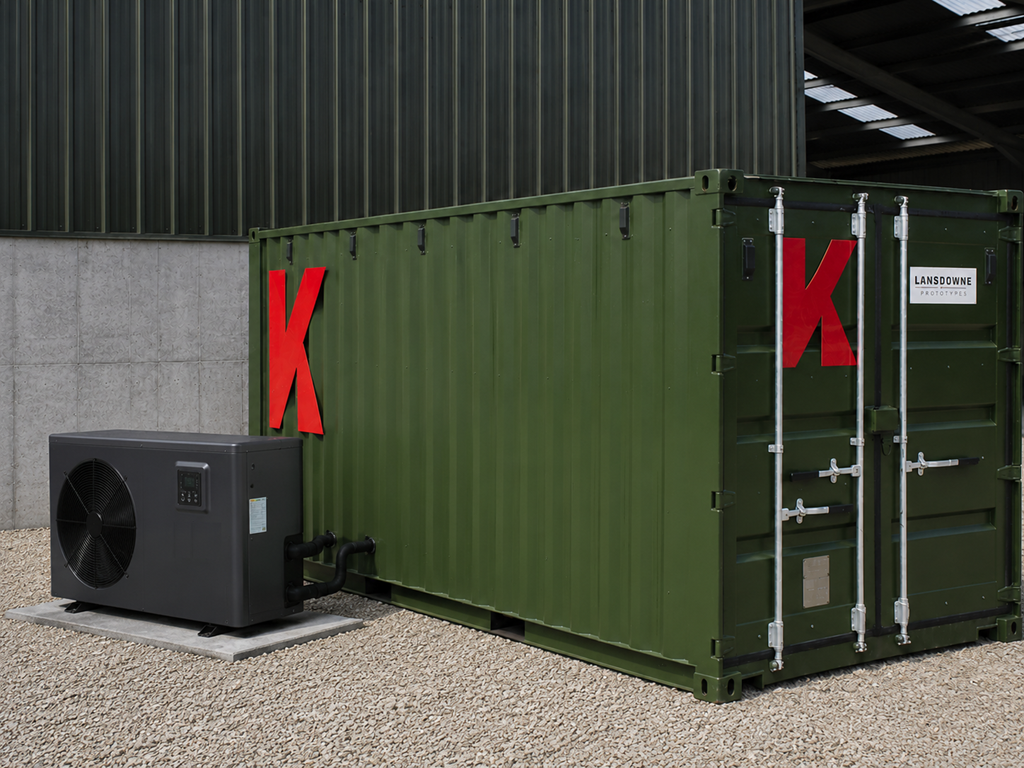
Pure ASHP

  • 11 batches per year
  • Throughput – up to 176m³
  • Speed
    • 33 days standardised cycle time
    • No seasonal variation
  • Cost – from £11.61 / m³
  • Requires 230V single-phase grid link (~1.3 kW electrical draw).

✔️ Complete site flexibility (can be shaded)

Biomass

  • 15kW boiler
  • 45 batches per year
  • Throughput – up to 730m³
  • Speed
    • 7.5 to 33 days standardized cycle time
    • No seasonal variation
  • Biomass – 39kg / m³
    • Up to a projected 59% saving vs. a traditional vented kiln*

✔️ Complete site flexibility (can be shaded)

Lansdowne Zero-Vent vs. Recirculation Kilns: The Thermodynamic Reality

When evaluating high-performance kilns, commercial timber and firewood producers often look at Recirculation Kilns as the industry benchmark for efficiency. While recirculation systems are a major upgrade over primitive “dump-and-vent” boxes, they still operate on a fundamentally flawed open-system design.
Here is how the patented Lansdowne Kiln (GB2631489) compares to a premium UK recirculation system.


RECIRCULATION KILN (Open System)
Heats Air > Circulates Air > Opens Dampers to Vent Vapour

  • Wastes thousands of kWh of sensible heat directly into the sky.
  • Requires a massive 35kW+ boiler footprint to heat incoming cold air.


THE LANSDOWNE KILN: ZERO-VENT (Closed System)
Heats Air > Circulates Air > Liquefies Vapour on Condensing Plates
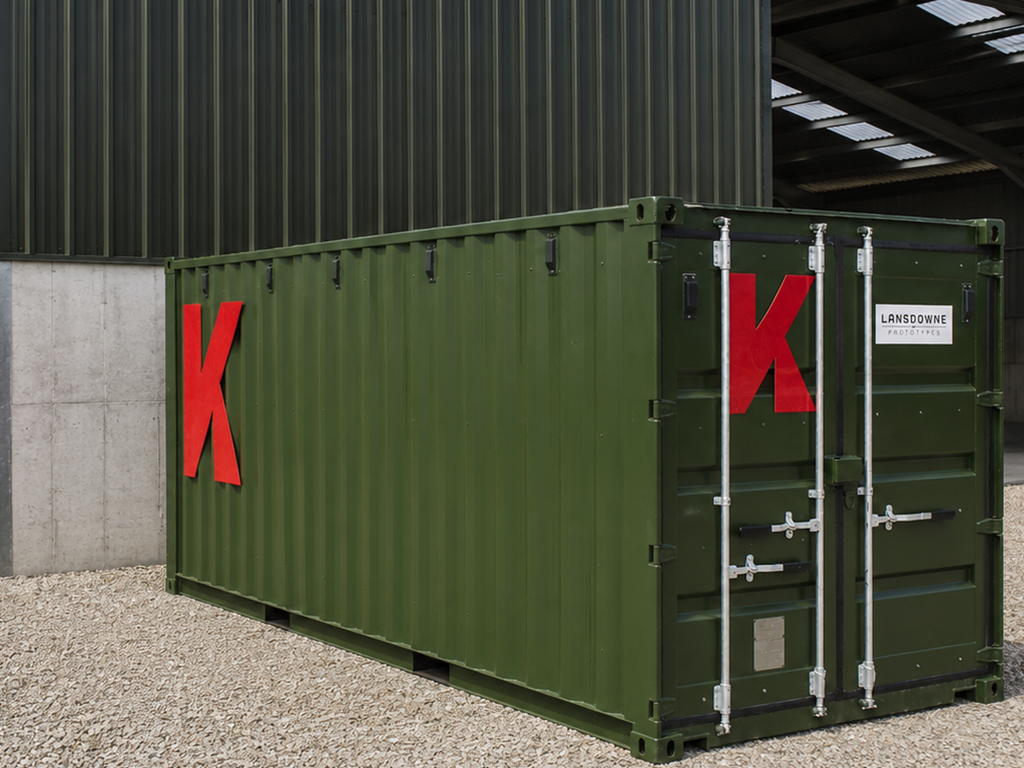
  • Virtually all sensible heat stays permanently trapped inside the vault.
  • Operates at full speed on a modest 20kW boiler or a 5kW heat pump.

Solar Kiln (East or West door)

Harvesting the energy of the sun in summer to use to heat your home in the winter… Powering the kiln with sunshine alone will produce an estimated*:

  • Firewood – “Super-Premium” dry micro batch for 29% more energy
    • >4 loads p.a. Full drying cycle (60% to 5%)
    • (2m high) (70 – 150 days from felling to 5% moisture content)
  • Firewood – “Ready to Burn” dried to <20% Moisture content
    • >6 loads p.a. from green to “ready to burn” ( 60% to 20%)
      • Batch 1 (The Spring Charge): Loaded March 1st – Dried by mid-May (~75 days).
      • Batch 2 (The Mid-Summer Flush): Loaded mid-May – Dried by mid-June (~30 days).
      • Batch 3 (The High-Summer Flush): Loaded mid-June – Dried by mid-July (~30 days).
      • Batch 4 (The Late-Summer Flush): Loaded mid-July – Dried by late August (~35 days).
      • Batch 5 (The Autumn Charge): Loaded late August – Dried by mid-November (~80 days).
      • Winter Multi-Month Stash: A 6th batch can be loaded in late November and will slowly dry over the winter months, finishing in late February.
  • 48 – 96 m3 of logs p.a.
  • Woodchip cycles are much faster
  • Cost to run approximately £0 p.a.

Electric Kiln - Air to water heat pump

Powering the kiln with electricity alone will produce an estimated*:

  • Firewood – “Premium” dry micro batch dried to <10% Moisture content
    • 23% more energy
    • >8 loads p.a.
    • (<45 days from felling to 10% moisture content)
  • Firewood – “Ready to Burn” dried to <20% Moisture content
    • >11 loads p.a. from green to “ready to burn” (60% to 20%)
      • Batch 1: Loaded Jan 1st – Dried by Feb (~34 days)
      • Batch 2: Loaded Feb – Dried by Mar (~34 days)
      • Batch 3: Loaded Mar – Dried by Apr (~33 days)
      • Batch 4: Loaded Apr – Dried by May (~33 days)
      • Batch 5: Loaded May – Dried by June (~33 days)
      • Batch 6: Loaded June – Dried by July (~33 days)
      • Batch 7: Loaded July – Dried by Aug (~33 days)
      • Batch 8: Loaded Aug – Dried by Sept (~33 days)
      • Batch 9: Loaded Sept – Dried by Oct (~33 days)
      • Batch 10: Loaded Oct – Dried by Nov (~33 days)
      • Batch 11: Loaded Nov – Dried by Jan 1st (~33 days)
  • 90 – 176 m3 of logs p.a.
  • Woodchip production is much faster
  • Cost to run = £2,100 p.a.* (£12 per m3 on average)

Solar Kiln with Air-to-water back up

Powering the kiln with both solar and electricity will produce an estimated*:

  • Firewood – “Premium” dry micro batch dried to <10% Moisture content
    • 23% more energy
    • >9 loads p.a.
    • (2m high) 
(30 – 45 days per from felling to 10% moisture content)
  • Firewood >11 loads p.a. from green to “ready to burn” (60% to 20%)
    • Batch 1: Loaded Jan 1st – Dried by Feb 5th (~35 days) — Powered mostly by ASHP; solar provides winter baseline.
    • Batch 2: Loaded Feb 5th – Dried by Mar 12th (~35 days) — ASHP runs off-season top-ups; solar generation begins climbing.
    • Batch 3: Loaded Mar 12th – Dried by Apr 14th (~33 days) — Spring solar takes over daytime load; ASHP runs during cold nights.
    • Batch 4: Loaded Apr 14th – Dried by May 15th (~31 days) — Strong spring solar; minimal heat pump intervention required.
    • Batch 5 (Free Solar Batch): Loaded May 15th – Dried by June 14th (~30 days) — Fully Passive Solar. Heat pump remains completely switched off.
    • Batch 6 (Free Solar Batch): Loaded June 14th – Dried by July 14th (~30 days) — Fully Passive Solar.
    • Batch 7 (Free Solar Batch): Loaded July 14th – Dried by Aug 15th (~32 days) — Peak summer heat retention. Fully Passive Solar.
    • Batch 8: Loaded Aug 15th – Dried by Sept 16th (~32 days) — September tail end; heat pump transitions back in on cool nights.
    • Batch 9: Loaded Sept 16th – Dried by Oct 19th (~33 days) — Autumn solar starts fading; ASHP provides steady baseline to prevent stall.
    • Batch 10: Loaded Oct 19th – Dried by Nov 23rd (~35 days) — Damp autumn conditions bypassed by active 40°C thermal slab.
    • Batch 11: Loaded Nov 23rd – Dried by Dec 28th (~35 days) — Deep winter drying maintained at full commercial speeds.
  • 90 – 176 m3 of logs p.a.
  • Woodchip production is much faster
  • Can be loaded at any time.
  • Cost to run = £910 p.a.* (£5.10 per m3 on average)

Biomass or Waste heat (>35°C)

Powering the kiln with waste heat alone is dependent on temperature and power available.
  • Biomass powered 80°C
    • Firewood – “Ready to Burn” dried to <20% Moisture content
    • <45 loads p.a.
    • 730m³
  • Biomass powered 80°C
    • Firewood – “Premium” dry micro batch dried to <10% Moisture content
    • 23% more energy
    • >38 loads p.a.
    • 608m³
  • Biomass powered 80°C
    • Firewood – “Super-Premium” dry micro batch dried to <5% Moisture content
    • 29% more energy
    • >22 loads p.a.
    • 352m³
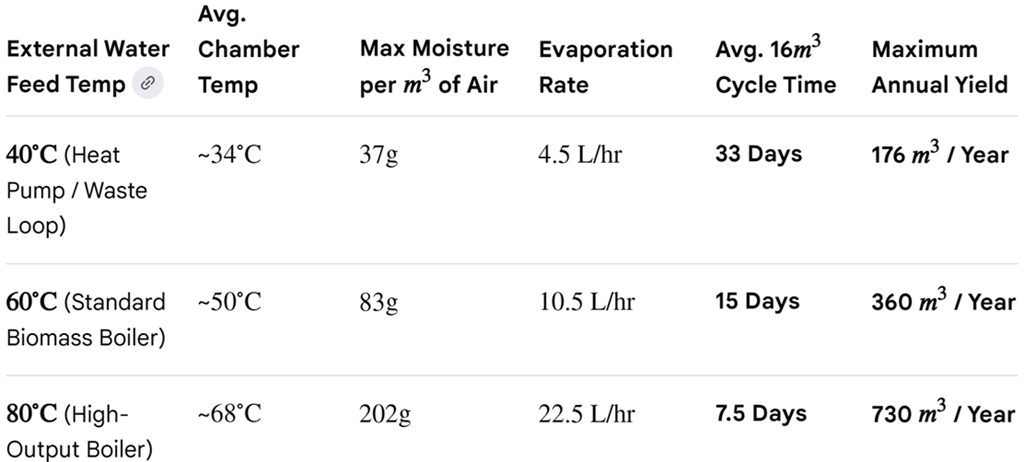
  • Biomass powered 60°C
    • Firewood – “Super-Premium” dry micro batch dried to <5% Moisture content
    • 29% more energy
    • >10 loads p.a.
    • 160m³
  • Woodchip cycles are much faster
  • Can be loaded at any time.
  • Cost to run = £?

Hook up your existing hot water loop—and multiply your output by up to 400%

If you have a boiler (>15kW) on-site, the Lansdowne Kiln turns your waste heat into a hyper-speed drying engine. Traditional vented kilns connected to biomass boilers require immense power (>35kW) and fuel consumption for the same drying throughput because they are constantly heating up cold outside air to replace what they vent.

Because the Lansdowne is a completely sealed, zero-vent envelope, almost all of your boiler’s energy goes strictly into vaporising water. Crank your feed loop up to 60°C for a projected 15-day firewood turnaround, or push it to 80°C to finish a complete commercial batch in approximately 7 days.* You get unmatched throughput, pristine cellular timber preservation, and a total fuel requirement that is a fraction of traditional vented systems. If you feed water at 80°C, the savings are 59%!

LANSDOWNE KILN TOTAL: 2,710 kWh per load

  • Biomass Boiler power requirement – 15 to 18kW
  • Latent Heat (Evaporation) : 2,386 kWh (88%)
  • Fabric Loss (Insulation) : 324 kWh (12%)
  • Ventilation Waste : 0 kWh (0% – SEALED)

TRADITIONAL VENTED KILN TOTAL: 6,662 kWh per load
  • Biomass boiler power requirement – 35 to 40kW
  • Latent Heat (Evaporation) : 2,386 kWh (36%)
  • Fabric Loss (Insulation) : 324 kWh (5%)
  • Ventilation Waste : 3,952 kWh (59% – WASTED)

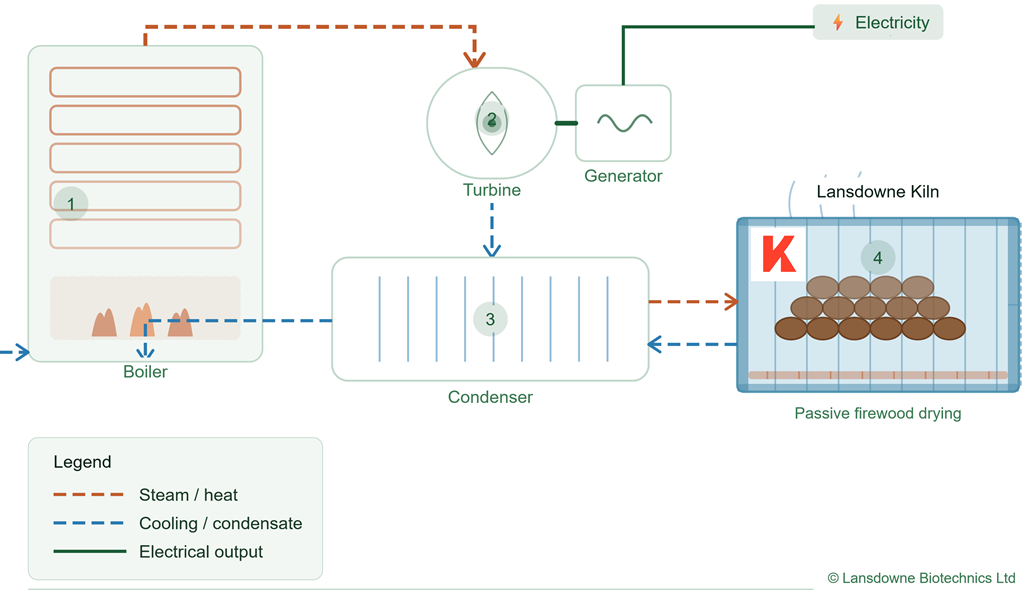
Waste Heat from Domestic Refuse Incineration or Data Centre

This thermodynamic process is ideal for utilising low level waste heat.

  1. Boiler — water heated by incinerated domestic household waste
  2. Turbine + Generator — electricity to power homes
  3. Condenser — water MUST be returned to the liquid state before it is returned to the boiler, releasing waste heat
  4. LansdowneKiln — utilising the waste heat to dry timber for construction or firewood

The Lansdowne Kiln thermodynamic process is ideal for utilising the cooling water from a datacentre. Lansdowne Kilns can be added into the flow from the cooling matrix either directly or via a heat pump cooling system.

*Estimations based on design calculations. Actual capacities will vary depending on the species of wood, moisture content when loaded, loading style and spacing, weather conditions, site positioning, and other parameters. Please contact us for a better understanding of your specific site configuration. E&OE
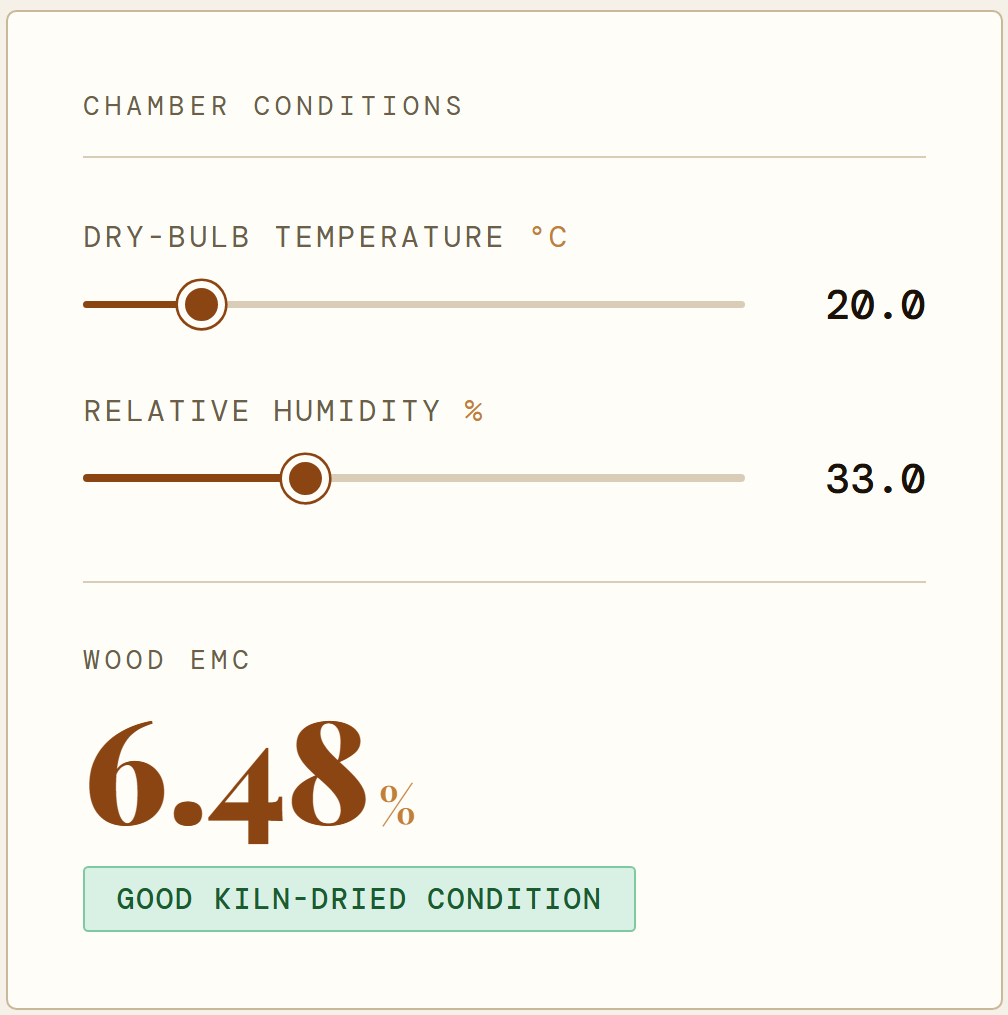
Website - live reporting of moisture content


Lansdowne Biotechnics have developed a bespoke moisture content prediction algorithm.

The live EMC prediction can be checked any time using the website on your phone or laptop. Once you are happy that the wood is in the right range, open the kiln to make a final assessment with a pin probe, etc.

Equilibrium Moisture Content is the moisture level wood will attain if left in stable ambient conditions. The unique passive circulation in the Lansdowne Kiln is ideal for non-contact EMC measurements and has allowed Lansdowne Biotechnics to develop this unique algorithm.

Each TLK comes with its own monitoring system that connects to your WiFi. If you don’t have WiFi in range of your kiln, please order an Off-Grid WiFi Hotspot TLKX-WiFi.

Discover more about our passive wood kilns

What are the benefits?

Discover More

How to order a kiln

Discover More

About Lansdowne

Discover More